
by Jenny Barnett
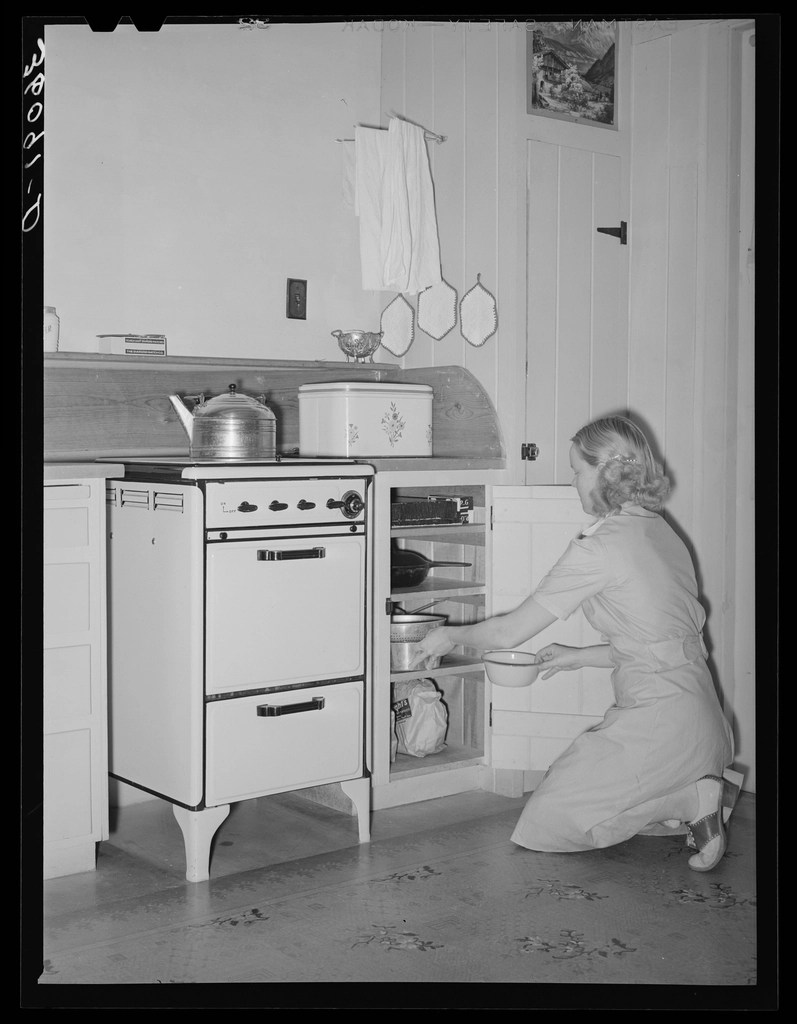
Some kitchens are made to entertain.
Others are made to work.
The heritage kitchen isn’t about marble countertops or smart appliances. It’s about function, rhythm, and memory, a space that pulls its weight and then some.
It’s a room where cast iron hangs close to the stove, five-gallon buckets of flour live under the butcher block, and every drawer knows what it’s for. And if you’ve ever cooked with both hands while a pot of lard renders behind you and bread proofs on the back shelf, you know exactly the kind of space I mean.

Form Follows Function (With a Dash of Soul)
The best old kitchens were built around movement and memory.
There was no “work triangle” because everything was already in reach:
- The flour was stored in bulk (my grandma kept hers in 5-gallon buckets to deter mice)
- The cast iron stayed on the stovetop
- Utensils hung on hooks, not buried in drawers
- Hot pots had a trivet on every surface
- And a tea towel was never more than an arm’s length away
Designing like this doesn’t require a renovation. It just takes a return to usefulness.
Tools that Earn Their Place
Here are a few staples I wouldn’t trade for any touchscreen gadget:
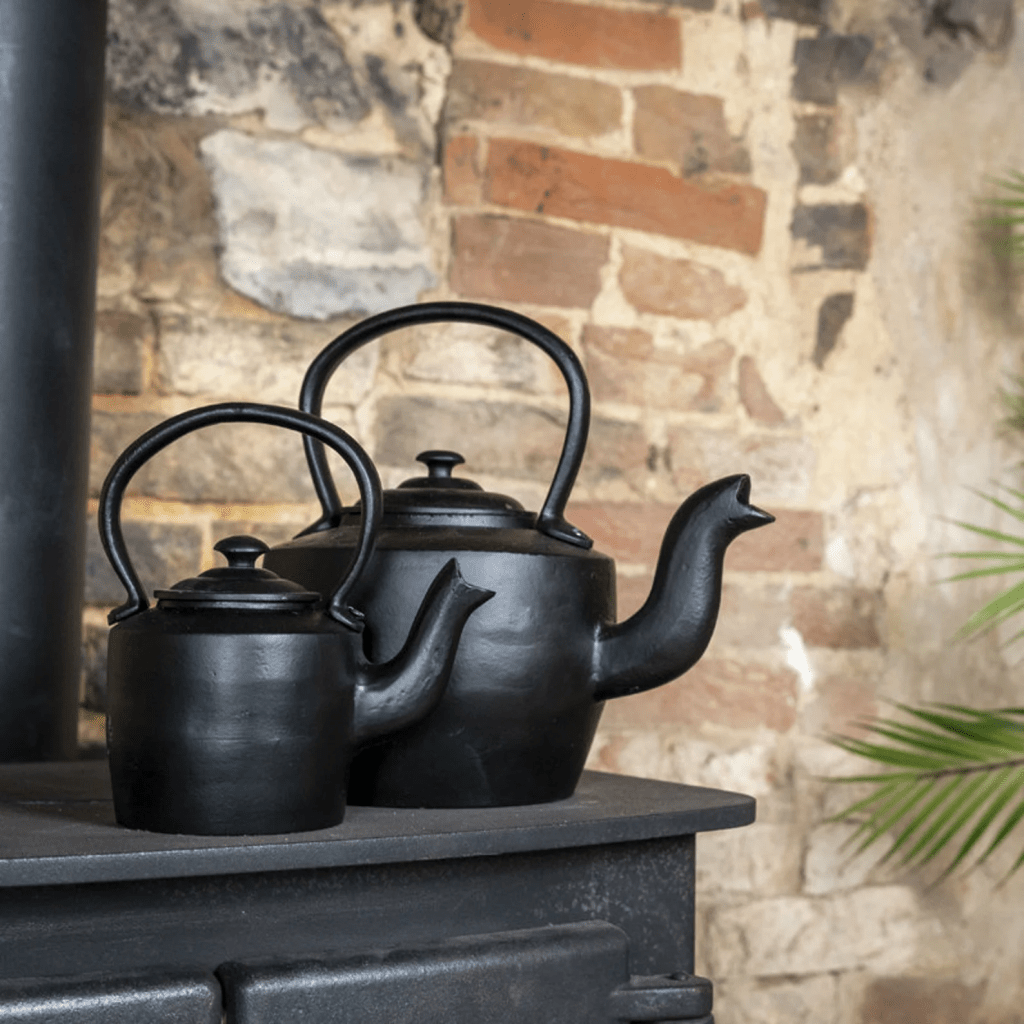
- Cast Iron Kettle — Not just for tea. Use it for humidifying in winter, simmer pots in fall, or as a backup water heater during power outages.
- Heavy-Duty Trivets — Save your counters. Ours (linked) are iron and sit permanently by the stove.
- Handmade Pot Holders & Oven Mitts — Thick, simple, and always drying by the fire. Forget the store-bought silicone stuff.
- 5-Gallon Flour Buckets — If you bake, bulk makes sense. I keep two sets: one for all-purpose, one for whole grain. Label clearly and store cool.
- Can-Size-Specific Pantry Shelves — Game-changer for home canners. No more tipping jars or wasted vertical space, and you can fit so many more cans in a pantry that’s built for it. This is most easily achieved through good old DIY.
Add in iron hooks, towel bars, and hanging pot racks, and you’ve got a setup that works with you, not against you.
Tip: If you’re adding iron details, go for hand-forged where possible , they’re sturdier, more beautiful, and they age with the space, not against it.
Layout Lessons from the Past
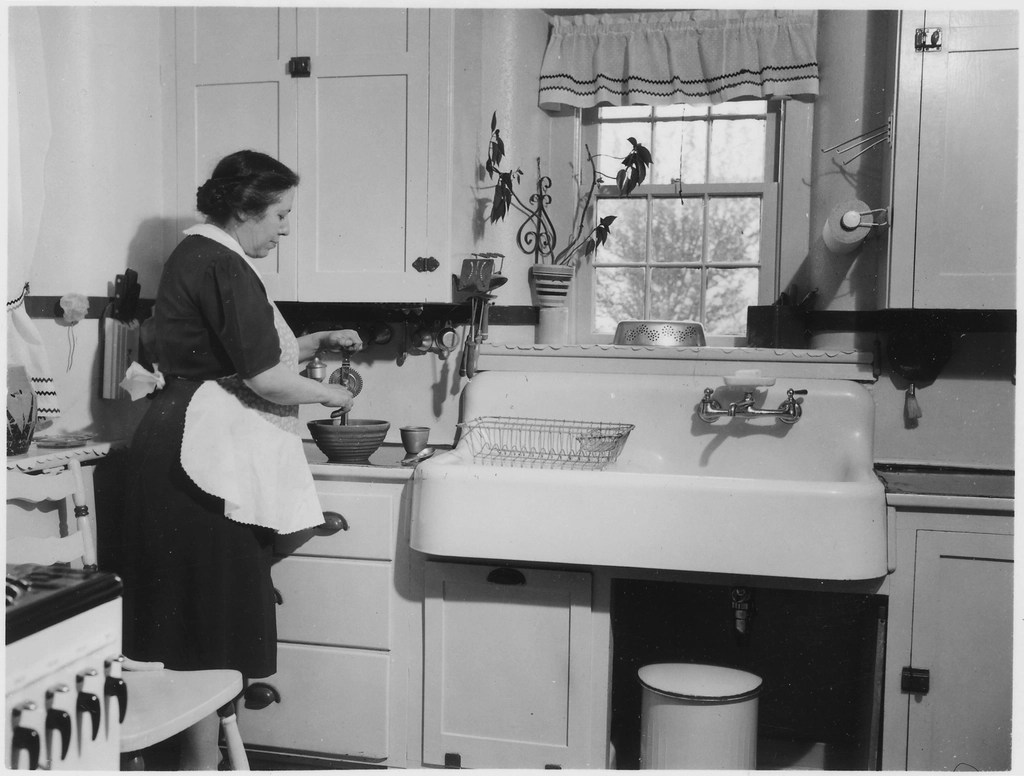
The best heritage kitchens weren’t cluttered, they were layered.
Built to evolve with the season and the task at hand.
Here’s how to bring that thinking into your own kitchen:
1. Create Stations
Even in a small space, define zones for prep, baking, preserving, and cleaning. Think of your tools and ingredients living near where they’re used.
2. Use Vertical Space
Hooks, rails, and shelves can double your workspace and make your best tools visible. Keep things off the counter and close to hand.
3. Leave Room to Move
Avoid overcrowding. A clear table, a good stool, and elbow room do more for a working kitchen than any backsplash ever could.

Modern Frontier, Timeless Bones
You don’t have to live off-grid to build a kitchen with purpose.
You just have to choose function over fluff, story over style, and materials that hold memory.
Around here, a cast iron pan is worth more than a stand mixer. And the hand-labeled pantry shelves? That’s what gets you through a long winter with grace.
The heritage kitchen isn’t frozen in time, it’s seasoned, worn, and wise.
Just like the hands that work in it.
— Jenny

 WILD WEST TOPOS
Leave a comment